
The Recipe for Processing Collective Trauma: Ingredients for Shared Healing and Regulation
Updated: 3 days ago
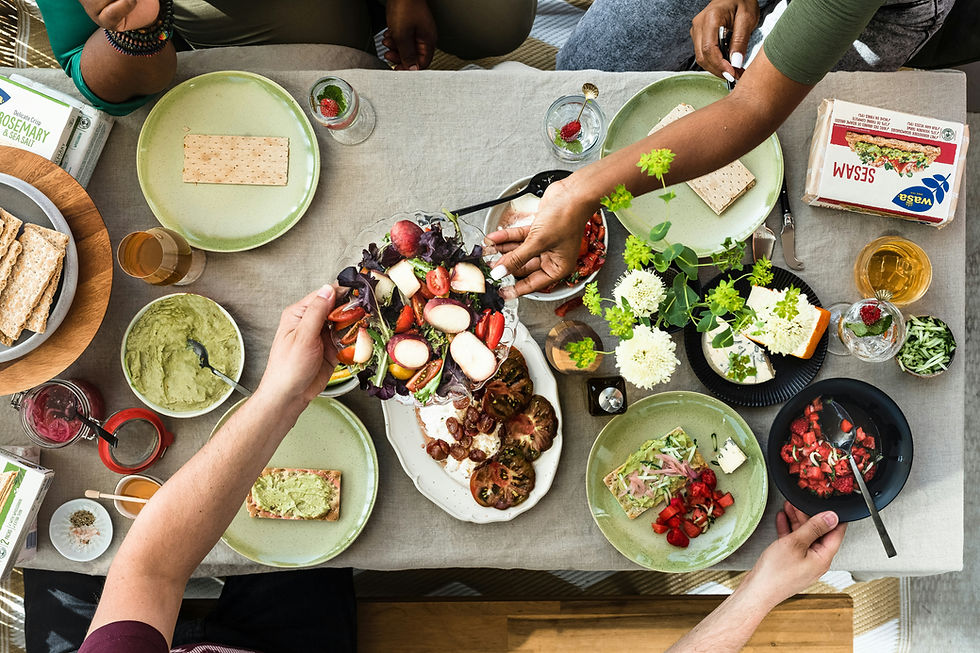
At Artesian Collaborative, we view mental health not as a finish line, but as an ongoing practice—much like preparing a nourishing meal. It takes intention, care, and sometimes the willingness to pause, reassess, and make room for what is needed.
Recently, our team of therapists gathered for a conversation about how trauma affects our minds, bodies, relationships, and workplace systems. One question kept rising to the surface:
How do we process trauma when traumatic events feel like a constant part of daily life?
With global crises, relentless news cycles, and ongoing systemic stress, individual coping tools can only carry us so far. Collective trauma asks us to move beyond the idea that healing is something we must do alone. Below is a practical “recipe” inspired by our conversation—an invitation to make space for shared regulation, grounded action, and sustainable resilience.
The Recipe: Navigating Collective Trauma
Prep Time: Ongoing
Yield: Greater communal capacity, more regulation, and less burnout
Core Concept: Shifting trauma from an individual burden to a shared responsibility
Ingredients
1 Cup of Systemic Awareness (Unpacking the Individual Myth)
Western culture often frames trauma as an individual battle. We praise people for being “resilient” or for overcoming hardship, but this can overlook the reality that many stressors are systemic, environmental, and collective.
When trauma is treated solely as a personal problem, it can leave people feeling guilty, isolated, or as though they are failing for struggling. Recognizing that your exhaustion, grief, anger, or overwhelm may be a normal response to an abnormal environment is not giving up—it is an important place to begin.
2 Tablespoons of 'Spheres of Influence'
Our brains were never designed to hold the weight of the entire world at once. One helpful way to protect your energy is to separate concerns into three circles:
What you control: Your immediate choices, boundaries, care practices, and direct actions.
What you influence: Your relationships, workplace culture, family, and local community.
What you care about: Larger social issues, global events, and political realities that matter deeply but may be beyond your direct reach.
The goal is not to stop caring about what is happening in the world. It is to anchor your daily energy in the places where you can take meaningful action, rather than becoming depleted by everything you cannot control.
1 Heaping Scoop of Communal “Blinking” (Shared Capacity)
During our conversation, we reflected on a simple but powerful metaphor: human eyes need to blink, but we do not all blink at the same time.
You do not have to show up for every cause, every outrage, and every crisis every single day. Community care means trusting that when you need to rest, log off, tend to your own life, or step back, others may be able to carry the torch for a while. And when they need a break, you may be able to do the same.
Shared care is not about doing everything. It is about remembering that none of us are meant to do it alone.
A Pinch of Radical Acceptance
Radical acceptance does not mean approving of painful circumstances or becoming passive in the face of injustice. It means acknowledging reality as it is, so that we can stop spending precious energy fighting the fact that it exists.
Accepting our personal limits can help us move out of paralysis and toward manageable action. We may not be able to solve everything, but we can choose one next step that is aligned with our values.
Garnish with Radical Joy & Presence
As our team noted, people have birthday parties in war zones. Moments of laughter, warmth, connection, celebration, and beauty are not a denial of suffering. They are part of how human beings survive it.
Joy is not frivolous. It is regulation. It is resistance to hopelessness. It reminds our nervous systems that safety, love, and meaning can still exist alongside grief.
Instructions for Practice
Step 1: Recognize Desensitization and Apathy
When trauma and distressing information are constant, the nervous system may respond by numbing, disconnecting, or shutting down. If you find yourself thinking, “I cannot even care anymore,” try to meet that response with compassion.
This is not a moral failure. It may be your brain’s emergency brake—a sign that you need rest, support, or a smaller, more sustainable way to engage.
Step 2: Anchor in Real-Life Connection
Digital spaces can make suffering feel immediate, endless, and isolating. While staying informed matters, constant exposure can also intensify overwhelm.
Whenever possible, return to connection in the real world: talk with a friend, attend a community gathering, volunteer locally, share a meal, or simply sit with people who make you feel grounded. Shared burden often becomes more manageable when it is held in relationship.
Step 3: Shift from “I Must Save Everyone” to “We all Eat Together”
You do not have to solve systemic problems alone. Instead of carrying the pressure to fix everything, consider what small contribution you can bring to the table.
If each person offers something—time, care, advocacy, resources, presence, or a willingness to listen—the collective becomes more nourished. Small, consistent actions rooted in community are often more sustainable than trying to carry the whole world until burnout takes over.
Healing from collective trauma is not about becoming unaffected. It is about learning how to stay connected to ourselves, one another, and what matters—without sacrificing our capacity in the process.
Actionable Next Steps
Processing trauma is a journey best taken together. If this conversation resonated with you, here are three ways to take the next step with Artesian Collaborative:
Join Our Community Table: We host free, monthly online community events where we gather as a supportive community to talk openly about tough, real-world topics just like this one. RSVP for our December Community Table on Collective Trauma.
Process More Deeply with an Artesian Collaborative Therapist: If this topic brought up personal, relational, or systemic stress you’d like to explore in a safe, tailored space, connect with one of our clinicians for individual or group therapy. Schedule a consultation here.
Bring This Conversation to Your Workplace or Community: Artesian Collaborative guides teams through tension, equipping leaders and organizations with psychological skills to build healthy cultures. Invite us to facilitate a workshop or training for your team.


